
GRESB has evolved from a niche rating to a global reference for ESG performance – and is fundamentally changing how real estate portfolios are managed. Organisations that invest in robust data quality, credible sustainability strategies and digital processes not only ensure regulatory compliance but also create measurable value.
With more than 2,000 real estate portfolios assessed worldwide, GRESB has become an international benchmark. Participation is accelerating across the DACH region: in Switzerland, from 6 to 75 companies; in Germany, from 21 to 105. The trend is clear: ESG is becoming operational, governance-relevant and increasingly measurable.
Key insights from GRESB 2025
1. An iterative process.
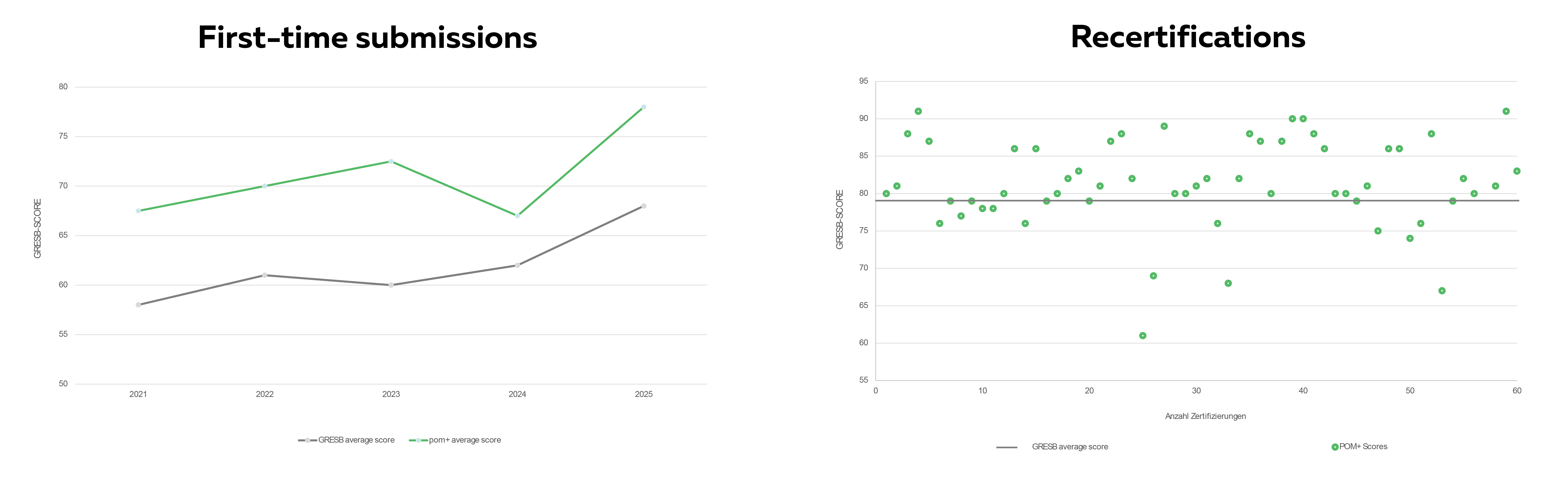
Each year, data quality improves, making genuine progress more visible. Standing Investments reach an average of 79 points in 2025 (+3.1).
2. Performance takes centre stage.
Focus is shifting towards measurable impact: energy intensity, CO₂ emissions, water consumption.
3. ESG influences returns.
Studies show that funds with higher GRESB scores tend to achieve more stable and stronger financial performance.
4. Data quality remains the main hurdle.
Heterogeneous systems, inconsistent sources and audit-proof documentation create the largest workload – and determine the benchmark’s reliability.
5. Digitalisation is becoming decisive.
Automated data flows, clear governance and resilient system landscapes are now as critical as financial indicators.
What does this mean for funds, owners and CREM organisations?
ESG performance is no longer an additional reporting element, but a key management parameter. Participation and measurable progress increasingly shape successful portfolio steering.
Data foundations: The shift from “collecting data” to “managing through metrics” is underway. Organisations with strong data structures have a clear advantage.
Strategy and measures: Net-Zero strategies are standard. What matters is their translation into roadmaps, investments and actionable projects.
Investor expectations: Institutional investors rely more heavily on GRESB as a filter and comparison tool. Strong scores support fundraising and capital allocation.
Transformation of real estate management: CREM is becoming more strategic, impact-driven and lifecycle-oriented.
Experience and impact: GRESB support by pom+
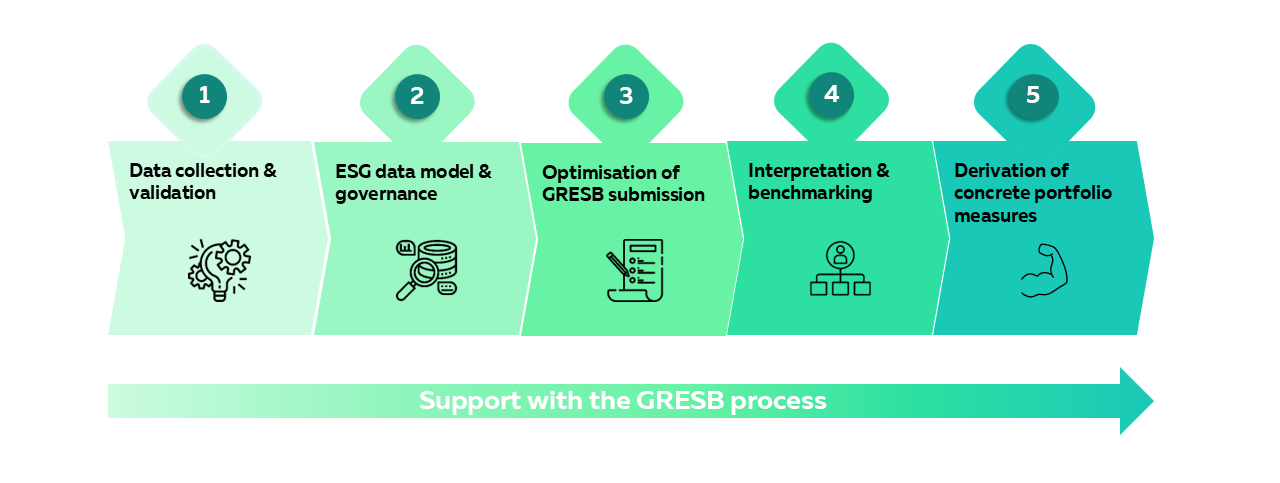
In 2025, pom+ supported 22 organisations and over 100 funds throughout the entire GRESB process – from data collection to interpreting results and defining measures. On average, our clients score 9 points above the global benchmark in first-time submissions and 5 points above in recertifications.
What does this mean for the coming years?
GRESB 2025 makes the direction clear: ESG is becoming a management tool that shapes investments, priorities and decision-making. The decisive factor will be how consistently organisations professionalise their data systems and demonstrate actual impact.
Our project experience shows that most of the effort does not arise in reporting itself, but in building structured data flows and audit-ready documentation. And Net-Zero strategies rarely fail due to lack of ambition – but due to unclear prioritisation, especially when investment windows are tight.
Those who develop their ESG performance systematically create a resilient foundation for value creation, risk reduction and long-term decision-making.